The Wettbewerbszentrale wants to have the question of the breakdown of average star ratings clarified by the BGH.
Clarification on Breakdown of Average Star Ratings Sought by Wettbewerbszentrale from BGH
Overview of the Case
The Hanseatic Higher Regional Court (OLG Hamburg) has stipulated that a reference must be provided when advertising with the phrase “known from …”. However, the court found no requirement to break down an average star rating by individual star categories.
Advertisements featuring customer ratings frequently lead to legal reviews by the Wettbewerbszentrale. A decision from the Court of Appeal regarding one of its test cases has now been released.
In a case brought by the Wettbewerbszentrale, the Hanseatic Higher Regional Court ruled that an advertisement stating “Known from …” (followed by a reference to press or radio coverage) must either include or link to a source from which the coverage originates. Conversely, the court did not consider it necessary to break down ratings by star categories when an advertisement featured an average star rating (Hanseatisches Oberlandesgericht, judgment of September 21, 2023, Case No. 15 U 108/22, not legally binding).
The Senate permitted an appeal due to the fundamental importance of the case. This decision has significant implications for how businesses can use customer feedback in their marketing efforts.
Requirements for "Known From..." Advertising
The defendant company had advertised online for real estate agents using phrases such as “Known from the media” and “Known from: …”. Specific regional and national newspapers and magazines were mentioned by name, but no reference with further information was provided.
The Wettbewerbszentrale argued that, for transparency, a reference was essential information to verify the advertising statement. This would allow consumers to check the veracity of the claim.
In contrast to the Regional Court of Hamburg, the Hanseatic Higher Regional Court determined that the relevant public has an interest in understanding the context of such media coverage. This includes knowing the occasion, manner, and timing of the report. Without this information, consumers cannot fully understand the advertising claim.
Furthermore, without a proper reference, it is impossible to determine several key aspects:
- Whether the report was positive, neutral, or negative about the defendant.
- If the report focused solely on the defendant or merely mentioned them in passing.
- Whether the report was based on personal experience with the defendant.
- How long ago the report was published and if it is still timely relevant.
The court therefore concluded that indicating the reference holds considerable weight for consumers.
Guidelines for Advertising with Average Customer Ratings
The internet presentation also featured advertising with:
“Customer Rating ø 4.62 / 5.00”
and
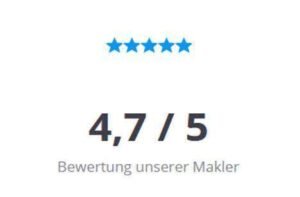
The Wettbewerbszentrale contends that when advertising with average customer ratings, providing the total number of ratings, the relevant time period, and a breakdown by individual star classes constitutes material information under Section 5a (1) sentence 1 UWG (Unfair Competition Act).
The Hamburg Regional Court partially upheld this claim, affirming the injunction only for stating the total number and period of submissions. However, the court did not deem a breakdown of ratings (i.e., how often each star category was awarded) as material (LG Hamburg, judgment of 06.09.2022, ref. 315 O 160/21). This point became the subject of an appeal by the Wettbewerbszentrale.
The Hanseatic Higher Regional Court dismissed the appeal on this motion, thus upholding the lower court's judgment. It argued that the breakdown of individual ratings by star categories does not significantly influence a consumer’s business decision. While customer ratings are crucial in online marketing, a star class breakdown (showing rating distribution) would indeed provide useful information. For instance, it could illustrate the closeness or dispersion of individual ratings, or indicate the prevalence of very few or very poor ratings.
Nevertheless, useful information does not always equate to material information. The court stated that the fact a breakdown would marginally increase the informational value of the average figure was insufficient to attribute significant weight to it for a consumer's business decision. Consequently, the court denied that a lack of breakdown was misleading.
The Senate also allowed an appeal regarding whether the breakdown of ratings by individual star categories constitutes material information under Section 5a UWG. The Wettbewerbszentrale intends to pursue this question before the highest court by filing the permitted appeal.
Conclusion
This case highlights the ongoing legal debate surrounding transparency in digital advertising, particularly concerning customer reviews and "known from" claims. While courts emphasize clarity for claims about media presence, the necessity of detailed breakdowns for average star ratings remains contentious. The upcoming BGH decision is expected to provide crucial guidance for businesses and competition law practices in Germany.