






No products in the cart.



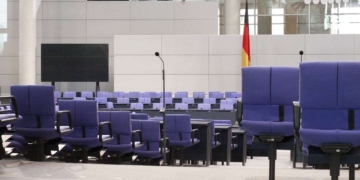
The German Bundestag is the parliament of the Federal Republic of Germany and thus the central organ of legislative power. It represents the German people, passes laws, elects the Federal Chancellor and exercises control functions over the Federal Government.
Key Facts
- The German Bundestag is the central organ of legislative power in the Federal Republic of Germany.
- It was founded after the Second World War in order to learn from the mistakes of the Weimar Republic and National Socialism.
- The main function of the Bundestag is to legislate, including the passing of federal laws.
- It elects the Federal Chancellor, who heads the Federal Government.
- The Bundestag has a control function vis-à-vis the Federal Government in order to monitor its work.
- It consists of deputies who are elected every four years in free and secret elections.
- The Bundestag represents the people and must maintain the trust of the citizens.
History and development
The German Bundestag was created after World War II in response to experiences with the failure of the Weimar Republic and the National Socialist dictatorship. The first federal election was held on August 14, 1949. Since then, the Bundestag has established itself as a stable and central institution of German democracy.
Role and functions
Legislation
One of the main tasks of the Bundestag is legislation. It is responsible for passing federal laws. Draft legislation may be introduced by the Federal Government, the Bundesrat or from within the Bundestag.
Election of the Federal Chancellor
The Bundestag elects the Chancellor, who heads the federal government. The Federal President proposes a candidate, who must then be elected by the Bundestag.
Control function
The Bundestag exercises a control function over the federal government. This is done through various means such as questions, Current Hours, investigative committees, and budgetary oversight.
Representation of the people
As elected representatives of the people, members of the Bundestag are responsible for representing the interests of citizens and introducing their concerns into the political debate.
Composition and elections
The Bundestag consists of members elected every four years by universal, direct, free, equal and secret suffrage. The number of deputies may vary, but is at least 598. Germany is divided into 299 constituencies, and one member of parliament is directly elected in each constituency. The remaining seats are allocated via state lists.
Mode of operation
The Bundestag works in plenary sessions, in which all members of parliament participate, and in committees, which deal with specific topics. The committees prepare the decisions of the plenum and play an important role in legislation.
Importance for citizens
The Bundestag is the heart of parliamentary democracy in Germany. As directly elected representatives of the people, members of parliament have a special responsibility to represent the interests of citizens and to stand up for their concerns.
Challenges and criticism
The Bundestag faces various challenges, such as the need to increase the efficiency of its work, improve transparency and involve citizens more. Criticisms include the size of the Bundestag, party funding and the question of how well members of parliament actually represent the diversity of the population.
Conclusion
The German Bundestag is a central institution in German democracy. It plays a crucial role in legislation, control of the government and representation of the people. It is important that the Bundestag works effectively and that the citizens’ trust in this institution is maintained.