




No products in the cart.



LOI, term sheet, MoU, often binding for startups?

In hardly any other phase of a start-up is signing as fast as in the early phase of cooperations, investments...
Read moreDetails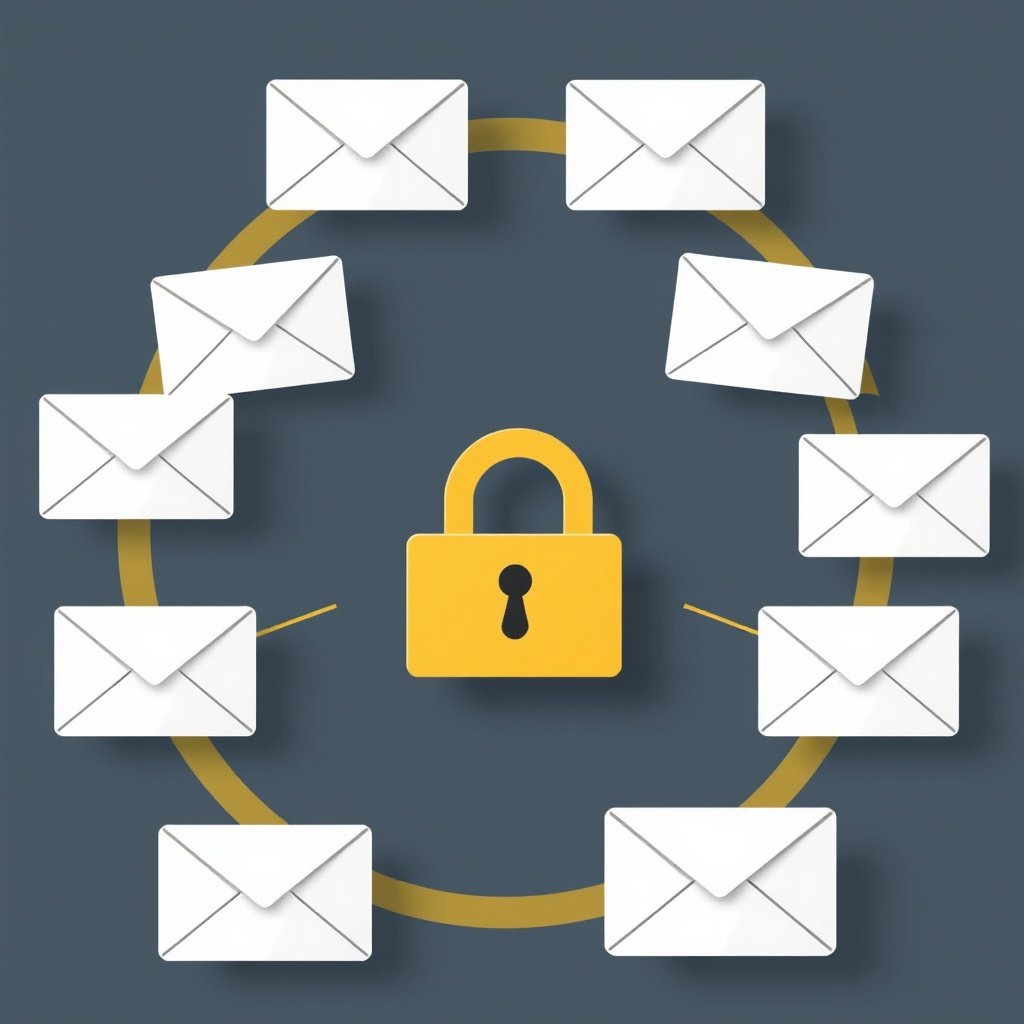
It is impossible to imagine modern corporate communication without e-mail. It is not only used for the rapid exchange of information, but also plays a central role in the documentation of business processes. However, the business use of emails is accompanied by extensive legal obligations, particularly with regard to archiving. Companies are obliged to store certain emails for specified periods of time in an audit-proof manner in order to meet legal requirements and to be able to provide the necessary evidence in the event of tax or legal audits. Failure to comply with these obligations can have serious consequences, ranging from financial penalties to criminal prosecution. The legal requirements for email archiving arise not only from commercial law and tax law, but also from data protection regulations and industry-specific regulations. The requirements of the General Data Protection Regulation (GDPR), which regulates the handling of personal data, are particularly relevant. Companies that do not comply with these obligations risk high fines and considerable reputational damage. The relevance of these regulations has been confirmed in recent years by various court rulings in which companies have been sanctioned for inadequate archiving practices. In addition, tax audits are increasingly demanding proof of proper email archiving, which underlines the need for legally compliant documentation practices.
An often underestimated risk is dealing with emails that relate to potential claims from the past. Companies must ensure that emails that could be relevant to potential legal proceedings or claims for damages are properly archived and remain accessible. This applies in particular to documents relating to long-standing contractual relationships or former business relationships. In practice, this means that companies should carry out a risk analysis to identify potentially contentious emails and secure them accordingly. An example from case law shows that companies that had not archived relevant contractual correspondence had considerable problems providing evidence in court and suffered considerable disadvantages as a result.
Another important aspect concerns protection against potential misuse by departing employees. It is necessary for companies to define clear processes and access restrictions to prevent unauthorized access to business-relevant data after an employee has left. This includes the prompt deactivation of access and a careful review of email communication for potential risks. Companies should ensure that no confidential information leaves the company unnoticed. It is also advisable to implement control mechanisms to document access to particularly sensitive email data and to be able to trace it if necessary. This significantly minimizes the risk of data leakage and loss of know-how.
By combining proactive archiving guidelines and a structured approach to former employees, companies can ensure that they both comply with legal requirements and minimize operational risks. Early advice from a specialist lawyer in the field of IT and data protection law can offer additional protection here.
The archiving of business emails is comprehensively regulated by law in Germany. The main principles are set out in the German Commercial Code (HGB) and the German Fiscal Code (AO). According to § 257 HGB and § 147 AO, companies are obliged to retain certain documents – which may also include emails – for specified periods of time. The periods are either six or ten years, depending on the type of document in question. Emails containing commercial or business letters are generally subject to a six-year retention period. If emails are part of bookkeeping or contain tax-relevant information, a ten-year period applies.
Archiving must also be audit-proof. This means that emails must be stored in such a way as to ensure that they cannot be altered, are complete and are available at all times. The requirements for archiving electronic documents are specified in the Principles for the Proper Keeping and Storage of Books, Records and Documents in Electronic Form and for Data Access (GoBD). This also includes the technical assurance that archived emails cannot be changed or deleted unnoticed. A tamper-proof archiving system is essential here.
Companies should also keep clear deletion logs to prove when and why certain emails were deleted. These logs are particularly important with regard to the GDPR, as they ensure that personal data is properly deleted after the retention period has expired. The documentation of these deletion processes should be regularly reviewed and updated to meet compliance requirements.
Companies should ensure that email archives are encrypted and that access to this data is strictly controlled. The implementation of access rights and logging systems is therefore essential. In addition, regular internal audits should be carried out to ensure that archiving complies with legal requirements. If deficiencies are identified, they must be rectified immediately.
The technical and organizational implementation of audit-proof email archiving should be part of a comprehensive data protection concept. This concept should also include measures to ensure data security, particularly with regard to external attacks and data loss. The implementation of such a strategy not only contributes to legal certainty, but also minimizes the risk of fines and liability cases.
Archiving emails from employees, especially former employees, poses particular challenges for companies. In principle, all business emails, regardless of the sender, must be archived if they are to be classified as subject to retention in accordance with legal requirements. After an employee leaves the company, it is therefore essential to carry out a thorough review of their mailbox. Business-related emails must continue to be archived in accordance with the legal deadlines. Private emails, on the other hand, if their use was permitted in the company, must be deleted immediately, as otherwise there could be a breach of data protection regulations, in particular the GDPR.
Companies should also ensure that employees are already informed of clear guidelines regarding the separation of private and business emails during the employment relationship. This helps to avoid conflicts afterwards and facilitates the subsequent separation of relevant and non-relevant data. Proactive communication of these guidelines supports compliance and raises awareness of the responsible handling of data.
In addition, the archiving of emails should also include regulations for the protection of trade secrets and sensitive business information. It is advisable to establish special measures, particularly with regard to protection against potential misuse by former employees. These include access restrictions and the logging of data access in order to prevent the misuse of sensitive information.
In addition, all business-related emails should be extracted and stored properly. Companies must pay particular attention to the protection of personal data and ensure that no private information is stored or processed unlawfully. Compliance with the GDPR requires comprehensive documentation that shows what data is stored, for what purpose and for how long. This documentation should be regularly reviewed and updated to comply with legal requirements.
Last but not least, it is advisable to introduce a procedure for the regular review of archived data. This ensures that data that is no longer required is deleted properly and in good time. This not only minimizes data protection risks, but also contributes to the efficiency of data storage. Training for employees on the subject of data protection and archiving can help to raise awareness of this issue.
The archiving of emails from customers is also subject to strict legal requirements. Especially in the SaaS sector, where many services are handled online and customer contracts are often created digitally, proper archiving is essential. For example, emails that document contractual agreements, arrangements or relevant business processes must be archived in accordance with the general retention periods. If an email contains tax or legally relevant information, it must be stored for ten years.
Particular attention must be paid to emails from former customers. Once a business relationship has ended, companies must ensure that personal data that is no longer required is deleted in accordance with the GDPR. At the same time, data that is relevant under tax or commercial law must continue to be stored. It is important to keep detailed documentation of which data has been stored or deleted and for what reason. Deletion logs are a key instrument for ensuring traceability vis-à-vis supervisory authorities. These logs should document exactly which data was deleted, when the deletion took place and on what legal basis this decision was based.
In addition, companies should establish automated processes to ensure the deletion of personal data once the legal deadlines have expired. Such processes minimize the risk of human error and help to efficiently comply with legal requirements. Companies should also ensure that they use systems to identify relevant emails in order to correctly fulfill the legally prescribed archiving burden.
Data migration also plays a role: if a company changes its archiving systems, all relevant customer data and emails must be transferred securely and completely to the new system. The integrity of the data must be guaranteed. Care must also be taken to ensure that no deletion deadlines are breached during the migration process. Training the responsible employees is of great importance here.
Further attention should be paid to the question of how companies deal with requests from former customers who request information about their stored data or wish it to be deleted. Companies are obliged to comply with these requests and must provide processes and documentation that meet these requirements.
The GDPR also requires that data must not be stored for longer than necessary. Companies should therefore carry out regular internal audits to ensure that data storage complies with legal requirements. It must also be ensured that data in different systems is deleted correctly and that the deletion process is documented.
It must also be ensured that the archived data is adequately protected. This includes encrypted storage solutions, access controls and logging of access. In the event of security incidents, those affected and the supervisory authorities must be informed quickly and transparently.
In summary, the proper archiving of emails in the SaaS sector and the GDPR-compliant management of data from former customers requires a clear and documented process. This is the only way to minimize legal risks and ensure compliance.
The legally compliant archiving of emails requires both technical and organizational measures. Companies should use specialized archiving systems that enable audit-proof storage. These systems must ensure that emails are stored in an unalterable, complete and orderly manner. In particular, systems that enable automatic recognition of emails requiring archiving and can assign them directly to the appropriate categories are recommended.
In addition, companies should create detailed procedural documentation that describes the email archiving processes. This documentation should be regularly reviewed and updated to ensure that it complies with current legal requirements. It is also important to implement deletion logs that document in detail when and why certain emails were deleted. These logs are a central component of the evidence provided to data protection authorities.
Another key element is ensuring access controls that prevent unauthorized persons from accessing archived emails. Access rights should be regularly checked and documented. The introduction of a role and authorization concept contributes to legal certainty. In addition, systems should be set up that log every access to archived data and make it evaluable if necessary.
The physical and digital security of archive systems is also of great importance. This includes encrypted storage media and regular security audits that identify and eliminate potential vulnerabilities. Companies should also pay attention to the implementation of back-up systems that guarantee data recovery in the event of a system failure or attack.
Furthermore, employee training is essential in order to raise awareness of the requirements for email archiving. In particular, topics such as the identification of emails requiring archiving, compliance with deletion deadlines and the handling of personal data should be taught. Case studies and practical exercises can help to raise awareness of potential risks. Employees should also be trained in how to correctly categorize emails and which criteria are used to determine the archiving obligation. Regular training and workshops are recommended here to ensure that knowledge remains up to date and new legal developments are taken into account.
The legally compliant archiving of emails is of crucial importance for companies. In addition to complying with legal obligations, such as those prescribed by the GDPR, the German Commercial Code (HGB) or the German Tax Code (AO), companies also minimize considerable liability risks with a structured archiving strategy. Missing or inadequate archiving can not only lead to financial penalties, but can also result in the loss of important business documents, which can be detrimental in legal proceedings.
In addition, proper archiving protects against reputational damage that can result from data breaches or data protection violations. A transparent and documented archiving process shows customers and business partners that the company takes data protection seriously and handles sensitive information responsibly.
As a specialized lawyer, I will be happy to assist you with the individual and legally compliant implementation of your email archiving. I will support you in analyzing existing systems, implementing legally compliant processes and creating the necessary procedural documentation. Benefit from my in-depth expertise in IT and data protection law and secure your company’s compliance in the long term. Let’s work together to develop an archiving strategy that protects your company from legal risks and strengthens it in the long term.

Marian Härtel ist Rechtsanwalt und Fachanwalt für IT-Recht mit einer über 25-jährigen Erfahrung als Unternehmer und Berater in den Bereichen Games, E-Sport, Blockchain, SaaS und Künstliche Intelligenz. Seine Beratungsschwerpunkte umfassen neben dem IT-Recht insbesondere das Urheberrecht, Medienrecht sowie Wettbewerbsrecht. Er betreut schwerpunktmäßig Start-ups, Agenturen und Influencer, die er in strategischen Fragen, komplexen Vertragsangelegenheiten sowie bei Investitionsprojekten begleitet. Dabei zeichnet sich seine Beratung durch einen interdisziplinären Ansatz aus, der juristische Expertise und langjährige unternehmerische Erfahrung miteinander verbindet. Ziel seiner Tätigkeit ist stets, Mandanten praxisorientierte Lösungen anzubieten und rechtlich fundierte Unterstützung bei der Umsetzung innovativer Geschäftsmodelle zu gewährleisten.
In hardly any other phase of a start-up is signing as fast as in the early phase of cooperations, investments...
Read moreDetails
I haven't gotten around to writing regular blog posts in a while. The reason for this is that I have...
Read moreDetails
Introduction Unity is one of the most popular game development platforms in the world and has recently introduced a new...
Read moreDetails
Attention game developers. Many studios are currently in the application phase for Germany-wide funding from the BMVI. However, there is...
Read moreDetails
In this day and age, when awareness of environmental and climate protection is becoming increasingly prominent, it is not surprising...
Read moreDetails
On September 10, 2025, the Federal Cabinet passed the government draft of the Tax Amendment Act 2025 and submitted it...
Read moreDetails
As a lawyer specializing in IT law, copyright law and competition law, I face the challenges that arise at the...
Read moreDetails
Sometimes it pays to think one step ahead legally. Not because the law has already settled everything conclusively. But because...
Read moreDetails
What is it all about? The decision "Right to be Forgotten II" published today, which is supplemented by the decision...
Read moreDetailsThe Distance Learning Protection Act (FernUSG) has been experiencing a renaissance for some time now. What for decades was considered...
Read moreDetails
In this personal and engaging episode, the experienced IT and media lawyer delves deep into the gray area of his...
Read moreDetails
In this video, I talk a bit about transparent billing and how I communicate what it costs to work with...
Read moreDetails