








No products in the cart.



Data protection aspects of wearables and health apps

The rapid development of wearables and health apps opens up enormous opportunities for medtech start-ups to innovate in the healthcare...
Read moreDetails
Digital platforms have been shaping entire markets for years. Marketplaces, SaaS ecosystems, creator platforms and sharing models are regularly based on a central platform that brings together supply and demand, aggregates data and enables transactions. Traditionally, such platforms are operated in the legal form of a GmbH or AG, with venture capital financing, a clear shareholder structure and a strong separation between platform operators and users.
In contrast, so-called platform cooperatives are gaining increasing attention. These are digital platforms that are organized as cooperatives or at least follow cooperative principles: Users, providers or other stakeholders are not only customers of the platform, but also have a stake in it and participate in value creation. This model combines digital business models with collective ownership and joint financing.
In legal terms, this construct operates at the interface of IT law, company law, contract law and corporate finance. At the same time, there are considerable uncertainties, particularly with regard to practical implementation in German law. While platform cooperatives are often implemented on an experimental basis abroad – especially in the Anglo-American region – the question arises in Germany as to how such models can be structured in a legally secure manner.
The following article classifies platform cooperatives from a legal perspective, sheds light on the corporate law principles, analyzes the financing options and highlights typical contractual and regulatory pitfalls. The focus is on digital start-ups, tech companies and platform operators who are examining alternative ownership and financing models.
The term “platform cooperative” is not legally defined. It does not describe a separate legal model, but rather an economic concept. The common denominator is the combination of a digital platform and a cooperative ownership structure. It is characterized by the fact that the users of the platform – such as providers, freelancers, content creators or service providers – are also members or stakeholders of the platform.
This model must be distinguished from traditional platform companies, in which users are only contractually bound without participation rights under company law. Likewise, a platform cooperative is not necessarily identical to a registered cooperative within the meaning of the Cooperatives Act. Although the eG is an obvious legal form, it is not the only option for mapping cooperative structures.
Typical features of platform cooperatives are
– Community ownership or user participation
– Democratic or at least participatory decision-making mechanisms
– Return of profits to members or reinvestment in the platform
– Transparent governance structures
– Use of digital infrastructure as a central business model
It is legally relevant that these characteristics do not automatically result from a specific legal form. Rather, they must be specifically implemented under company law, contractually and organizationally.
The eG is the classic legal form for cooperative models. According to Section 1 GenG, its purpose is to promote the acquisition or business of its members by means of joint business operations. This promotional purpose is generally well suited to platform models that provide their members with market access, infrastructure or reach.
The advantages of the eG lie in the variable number of members, the basic democratic structure (one member – one vote) and the possibility of returning economic benefits to members. Liability is also limited to the cooperative’s assets, provided there are no obligations to make additional contributions.
A disadvantage from the startup perspective is often the limited attractiveness for traditional investors. Venture capital structures, liquidation preferences or exit scenarios can only be mapped to a limited extent. In addition, the eG is subject to mandatory auditing by a cooperative association, which causes costs and organizational effort.
For platform cooperatives with a strong community focus and long-term orientation, the eG can nevertheless be a suitable vehicle, especially if growth is to be achieved through member financing rather than primarily through external investors.
In practice, platform cooperatives are often structured as GmbHs or UGs, supplemented by contractual participation and involvement mechanisms. Under company law, this is not a cooperative, but a corporation with an atypical shareholder structure.
Cooperative elements can be implemented through:
– Broad shareholder groups with low participation quotas
– Pool or trust models for user participations
– Voting rights restrictions or majority restrictions
– Profit appropriation rules in favor of active users
In principle, such structures are legally permissible, but are caught between the conflicting priorities of freedom of organization under company law and practical manageability. Considerable administrative and liability risks arise, particularly when there are a large number of shareholders.
The question also arises as to whether such a model still bears the basic cooperative concept or merely represents a hybrid participation model. This distinction can be relevant for external presentation and regulatory classification.
Increasingly, hybrid models are being discussed in which a platform company is operationally active while a cooperative or association holds shares or takes on governance functions. For example, a structure in which a GmbH operates the platform and an eG acts as the majority shareholder, whose members are the users, is conceivable.
Such models enable the separation of operational business and cooperative control. They are legally complex, as several articles of association, participation agreements and governance regulations have to be coordinated. Questions also arise regarding the group structure, distribution of liability and tax treatment.
The classic form of financing for cooperatives is the payment of shares by members. These serve as equity capital and also establish membership. This can be a low-threshold entry point for platforms, for example through small compulsory shares and optional additional shares.
From a legal perspective, care must be taken to ensure that no unauthorized repayment of capital contributions takes place and that the repayment of shares is clearly regulated. In addition, information and transparency obligations towards members must be complied with.
This form of financing is often not sufficient for high-growth platforms, as scaling costs, IT development and marketing require a high level of capital.
Platform cooperatives are often in tension with traditional venture capital. Investors regularly expect control rights, exit options and an increase in value through the sale of shares. Cooperative models, on the other hand, often aim for long-term stability and maximization of benefits for members.
Legally conceivable alternative financing instruments include
– profit-participating loans
– silent partnerships
– profit participation rights
– revenue or usage-based remuneration models
These instruments are governed by contract law and – depending on how they are structured – capital market law. Prospectus obligations, investment law and, where applicable, crowdfunding rules must be observed, particularly when addressing a broad range of users or the public.
Token-based investments are often discussed in the context of digital platforms. Tokens can represent economic rights, rights of use or governance functions. From a legal perspective, however, the decisive factor is whether they are securities, investments or pure utility tokens.
There is a considerable regulatory risk here for platform cooperatives. Depending on the structure, requirements from securities prospectus law, the Asset Investment Act or, in future, from European crypto regulation may apply. In addition, it must be clarified under company law whether and how tokenized rights are linked to membership or shareholder rights.
In practice, the tokenization of participation rights requires very careful legal structuring and is often only practicable to a limited extent for early-stage start-ups.
Platform cooperatives are regularly characterized by multi-role relationships. A user is not only a customer or provider, but also a member, co-financier or co-creator. In terms of contract law, these roles must be clearly separated and at the same time coordinated.
Typically, several contractual relationships exist in parallel:
– Terms of use of the platform
– Membership or participation agreements
– Employment or service agreements, if applicable
– Governance or participation agreements
Unclear demarcations quickly lead to liability and qualification risks, for example in labor law, tax law or social security law. Particularly in the case of platforms with the active participation of members, it must be carefully examined whether pseudo-self-employment or employee-like relationships can arise.
A central element of platform cooperatives is the distribution of the value generated. This can take the form of profit sharing, discounts, reimbursements or promotional benefits. From a legal perspective, a distinction must be made between the distribution of profits under company law and contractual remuneration models.
In the case of cooperatives, reimbursement to members is provided for by law, but must be regulated in the articles of association. In the case of corporations, a differentiated distribution of profits is only possible to a limited extent and requires a clear contractual basis.
From a tax perspective, there can be considerable differences here, particularly with regard to qualification as profit, remuneration or reimbursement. These aspects should be included in the structuring at an early stage.
Regardless of the ownership structure, platform cooperatives are subject to traditional IT law requirements. These include, in particular, liability issues for platform content, regulations on responsibility for user contributions and transparency obligations.
In the case of cooperative models, the question often arises as to who is legally considered the platform operator. Even if users are involved, the legal entity regularly remains the operator in the legal sense, with corresponding responsibility for content, processes and technical security.
Platform cooperatives are particularly sensitive in terms of data protection law, as they are often based on shared data usage. At the same time, there are increased expectations of transparency and co-determination.
It must be legally clarified who is the controller within the meaning of the GDPR, how access rights are regulated and how purpose limitation and data minimization are implemented. Members’ participation rights in the platform do not automatically confer access rights to personal data.
Conflicts can also arise if members are also competitors or exchange sensitive business data. Clear governance and compliance rules are required here.
Platform cooperatives offer interesting prospects from an economic and social perspective. They enable stronger user loyalty, promote sustainable business models and can open up alternative financing channels. However, they are legally challenging.
The biggest challenge lies in the proper structuring: company law, contract law, IT law and financing must be consistently coordinated. There are hardly any standard solutions, as each model depends heavily on the specific platform logic.
For start-ups, platform cooperatives are not a legal sure-fire success and are no substitute for traditional governance structures. Rather, they require a high degree of legal planning, transparency and discipline in their implementation. However, those who take these requirements seriously can build a sustainable and differentiating business model that deliberately sets itself apart from purely investor-driven platforms.

Marian Härtel ist Rechtsanwalt und Fachanwalt für IT-Recht mit einer über 25-jährigen Erfahrung als Unternehmer und Berater in den Bereichen Games, E-Sport, Blockchain, SaaS und Künstliche Intelligenz. Seine Beratungsschwerpunkte umfassen neben dem IT-Recht insbesondere das Urheberrecht, Medienrecht sowie Wettbewerbsrecht. Er betreut schwerpunktmäßig Start-ups, Agenturen und Influencer, die er in strategischen Fragen, komplexen Vertragsangelegenheiten sowie bei Investitionsprojekten begleitet. Dabei zeichnet sich seine Beratung durch einen interdisziplinären Ansatz aus, der juristische Expertise und langjährige unternehmerische Erfahrung miteinander verbindet. Ziel seiner Tätigkeit ist stets, Mandanten praxisorientierte Lösungen anzubieten und rechtlich fundierte Unterstützung bei der Umsetzung innovativer Geschäftsmodelle zu gewährleisten.
The rapid development of wearables and health apps opens up enormous opportunities for medtech start-ups to innovate in the healthcare...
Read moreDetails
There is always controversy and uncertainty around the imprint obligation of social media profiles, but also of profiles on Twitch...
Read moreDetails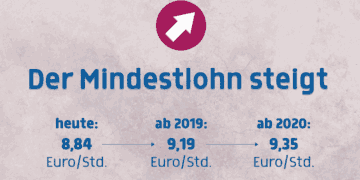
At the beginning of this year, there was a lot of news in german law. One is raising the minimum...
Read moreDetails
So i.m. reached a potentially relevant verdict of the OLG Munich, because although it is based on the checkout page...
Read moreDetails
The owner of an internet connection through which copyright infringements through file sharing have been committed cannot exempt himself from...
Read moreDetails
Today I would like to take a look at fifteen formulations that are often found in contracts or agreements, especially...
Read moreDetails
The following article was originally written by Andrea Rizzi from www.insightlegal.it and published by me here on the blog in...
Read moreDetails
If a statement can be interpreted differently, the person who reproduces the statement in a publication is obliged to indicate...
Read moreDetails
The German Parliament's Scientific Service has produced an expert report warning about the dangers of Alexa (and other similar gadgets...
Read moreDetailsThe Distance Learning Protection Act (FernUSG) has been experiencing a renaissance for some time now. What for decades was considered...
Read moreDetails
In this exciting episode of the itmedialaw podcast, we take a deep dive into the legal developments that will shape...
Read moreDetails
In this video, I talk a bit about transparent billing and how I communicate what it costs to work with...
Read moreDetails