
• Latest
  • Trending
744528b528e546596171b3d29c620a26

The MiCAR regulation is coming

26. June 2024
BGH considers Uber Black to be anti-competitive

Distance learning, coaching and synchronous online formats

2. March 2026
Media outlets consider influencers law pointless

Manipulated QR codes and quishing

27. February 2026
AI agents as autonomous contractual partners?

AI agents as autonomous contractual partners?

26. February 2026
Platform cooperatives as a financing and business model

AI training data as an asset: accounting, IP strategy and exit factor

25. February 2026
Streaming setup, influencers and contract law

Influencers: when marketing suddenly becomes commercial agency law

18. February 2026
Insolvency administrator and access to tax office data?

NRW audits influencers – and suddenly normal rules apply?

12. February 2026
iStock 1405433207 scaled

Legal pitfalls in revenue-based financing for start-ups

12. February 2026
Streaming setup, influencers and contract law

Streaming setup, influencers and contract law

9. February 2026
Platform cooperatives as a financing and business model

Platform cooperatives as a financing and business model

8. February 2026
Frankfurt district court a.M. softens influencer jurisdiction

VAT on donations, gifts and “support” from influencers?

5. February 2026
Chamber Court on obligations to injuntture in the case of acts of third parties

Jurisdiction in the contract: one word too many, one word too few

4. February 2026
New info on the status of the State Media Treaty

Customer hotline and support in SaaS

2. February 2026
BGH considers Uber Black to be anti-competitive

BGH: FRAND objection fails due to lack of willingness to license

28. January 2026
marianregel

InformationCheck.de is live: side project for source-based classification of social media claims

22. January 2026
DPMA

Paid mods, fan guidelines and EULA: when monetization is possible

21. January 2026
Is an 8 year old allowed to be an Esport player?

LOI, term sheet, MoU, often binding for startups?

20. January 2026
What actually is an IP? In the games, music and film industry!

Freelancer paid, but still not getting rights?

19. January 2026
Affiliate links for streamers and influencers

Comparison sites as an SEO trick

16. January 2026
Reverse vesting

Vesting, good leavers, bad leavers – why a lack of regulations costs startups dearly

15. January 2026
ai generated g63ed67bf8 1280

AI guideline for agencies and external service providers

14. January 2026
  • Mehr als 3 Millionen Wörter Inhalt
  • |
  • info@itmedialaw.com
  • |
  • Tel: 03322 5078053
Kurzberatung
Rechtsanwalt Marian Härtel - ITMediaLaw

No products in the cart.

  • en English
  • de Deutsch
  • Informationen
    • Ideal partner
    • About lawyer Marian Härtel
    • Quick and flexible access
    • Principles as a lawyer
    • Why a lawyer and business consultant?
    • Focus areas of attorney Marian Härtel
      • Focus on start-ups
      • Investment advice
      • Corporate law
      • Cryptocurrencies, Blockchain and Games
      • AI and SaaS
      • Streamers and influencers
      • Games and esports law
      • IT/IP Law
      • Law firm for GMBH,UG, GbR
      • Law firm for IT/IP and media law
    • The everyday life of an IT lawyer
    • How can I help clients?
    • Testimonials
    • Team: Saskia Härtel – WHO AM I?
    • Agile and lean law firm
    • Price overview
    • Various information
      • Terms
      • Privacy policy
      • Imprint
  • Services
    • Support and advice of agencies
    • Contract review and preparation
    • Games law consulting
    • Consulting for influencers and streamers
    • Advice in e-commerce
    • DLT and Blockchain consulting
    • Legal advice in corporate law: from incorporation to structuring
    • Legal compliance and expert opinions
    • Outsourcing – for companies or law firms
    • Booking as speaker
  • News
    • Gloss / Opinion
    • Law on the Internet
    • Online retail
    • Law and computer games
    • Law and Esport
    • Blockchain and web law
    • Data protection Law
    • Copyright
    • Labour law
    • Competition law
    • Corporate
    • EU law
    • Law on the protection of minors
    • Tax
    • Other
    • Internally
  • Podcast
    • ITMediaLaw Podcast
  • Knowledge base
    • Laws
    • Legal terms
    • Contract types
    • Clause types
    • Forms of financing
    • Legal means
    • Authorities
    • Company forms
    • Tax
    • Concepts
  • Videos
    • Information videos – about Marian Härtel
    • Videos – about me (Couch)
    • Blogpost – individual videos
    • Videos on services
    • Shorts
    • Podcast format
    • Third-party videos
    • Other videos
  • Contact
  • Informationen
    • Ideal partner
    • About lawyer Marian Härtel
    • Quick and flexible access
    • Principles as a lawyer
    • Why a lawyer and business consultant?
    • Focus areas of attorney Marian Härtel
      • Focus on start-ups
      • Investment advice
      • Corporate law
      • Cryptocurrencies, Blockchain and Games
      • AI and SaaS
      • Streamers and influencers
      • Games and esports law
      • IT/IP Law
      • Law firm for GMBH,UG, GbR
      • Law firm for IT/IP and media law
    • The everyday life of an IT lawyer
    • How can I help clients?
    • Testimonials
    • Team: Saskia Härtel – WHO AM I?
    • Agile and lean law firm
    • Price overview
    • Various information
      • Terms
      • Privacy policy
      • Imprint
  • Services
    • Support and advice of agencies
    • Contract review and preparation
    • Games law consulting
    • Consulting for influencers and streamers
    • Advice in e-commerce
    • DLT and Blockchain consulting
    • Legal advice in corporate law: from incorporation to structuring
    • Legal compliance and expert opinions
    • Outsourcing – for companies or law firms
    • Booking as speaker
  • News
    • Gloss / Opinion
    • Law on the Internet
    • Online retail
    • Law and computer games
    • Law and Esport
    • Blockchain and web law
    • Data protection Law
    • Copyright
    • Labour law
    • Competition law
    • Corporate
    • EU law
    • Law on the protection of minors
    • Tax
    • Other
    • Internally
  • Podcast
    • ITMediaLaw Podcast
  • Knowledge base
    • Laws
    • Legal terms
    • Contract types
    • Clause types
    • Forms of financing
    • Legal means
    • Authorities
    • Company forms
    • Tax
    • Concepts
  • Videos
    • Information videos – about Marian Härtel
    • Videos – about me (Couch)
    • Blogpost – individual videos
    • Videos on services
    • Shorts
    • Podcast format
    • Third-party videos
    • Other videos
  • Contact
Rechtsanwalt Marian Härtel - ITMediaLaw

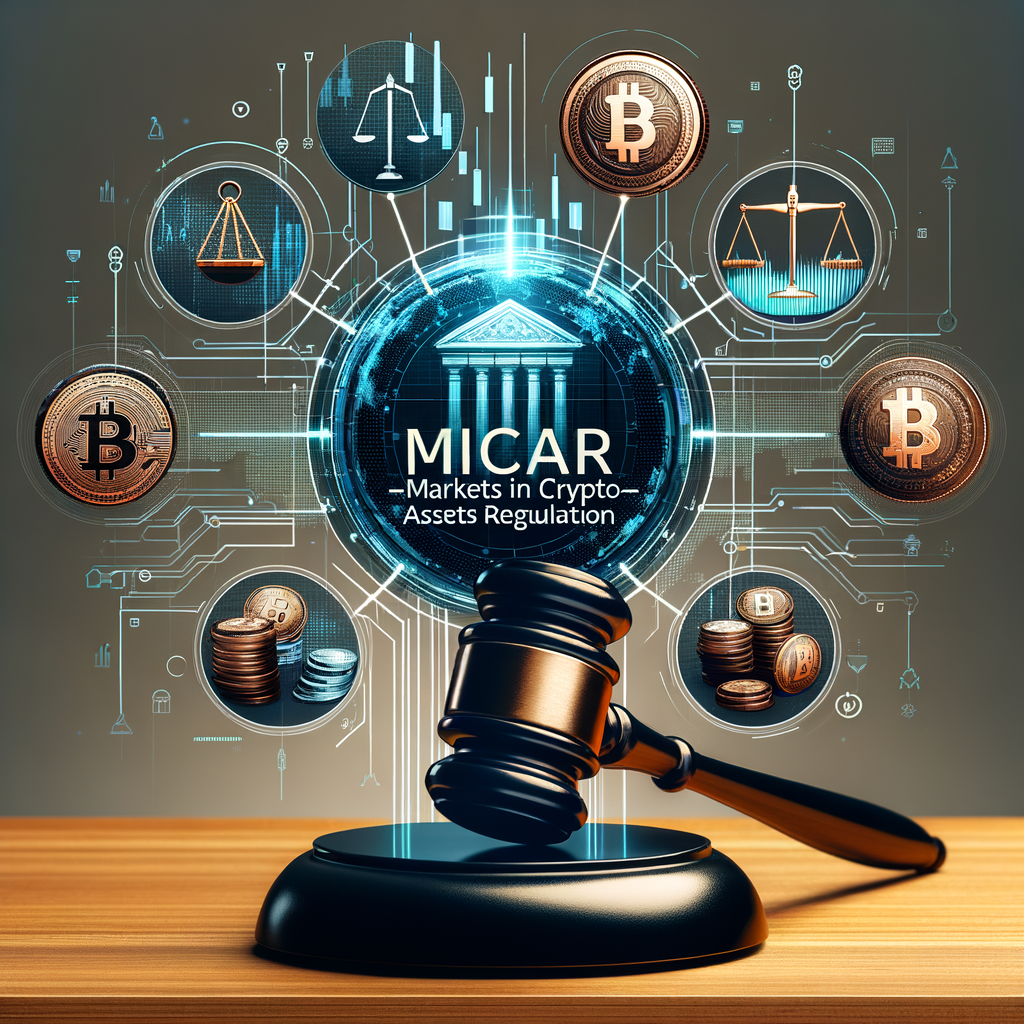
The MiCAR regulation is coming

26. June 2024
in Blockchain and web law
Reading Time: 8 mins read
0 0
A A
0
744528b528e546596171b3d29c620a26

The new EU Markets in Crypto-Assets Regulation (MiCAR) was published in the Official Journal of the European Union on June 9, 2023 and entered into force on June 29, 2023 in force. However, most of the provisions will only be applicable after a transitional period of 12 to 18 months. Nevertheless, market participants should already familiarize themselves with the new rules and prepare for their implementation now.in Germany, MiCAR is being implemented through two new laws: the Financial Markets Digitization Act (FinmadiG) and the Crypto Markets Supervision Act (KMAG). The FinmadiG accompanies the implementation of MiCAR and makes the necessary amendments to existing laws, such as the Money Laundering Act and the Banking Act, while the KMAG also regulates the supervisory activities of the competent authorities. It designates the Federal Financial Supervisory Authority (BaFin) as the competent supervisory authority for MiCAR regulations in Germany. In future, BaFin will be responsible for monitoring the MiCAR regulations and will be given the necessary powers to do so, such as intervening against unauthorized transactions.The KMAG is currently still in the legislative process and has not yet come into force. However, the “MiCAR Application Ordinance” is intended to enable companies to submit applications under MiCAR before the The FinmadiG also introduces a new Crypto Markets Supervision Act (KMAG) in order to be able to provide crypto asset services under the new legal framework in good time. In contrast to the term “crypto assets” in MiCAR, the previous “crypto assets” in the German Banking Act (KWG) have been renamed “cryptographic instruments”. The KWG crypto custody business becomes a “qualified crypto custody business”. The German Money Laundering Act (GwG) includes providers of crypto asset services within the meaning of MiCAR as obligated parties under money laundering law.

Content Hide
1. What does MiCAR regulate?
2. Which crypto assets fall under MiCAR?
3. What obligations apply to issuers?
4. What do crypto service providers need to consider?
5. What happens now?
5.1. Author: Marian Härtel
Key Facts
  • The EU MiCAR regulation came into force on June 29, 2023, with transitional periods of 12 to 18 months.
  • In Germany, this is implemented by the FinmadiG and the KMAG.
  • BaFin will take over the supervision of MiCAR rules in Germany.
  • MiCAR establishes a regulatory framework for crypto assets in the EU and creates a uniform licensing system.
  • Three token categories are defined: ARTs, EMTs and Utility Tokens.
  • Crypto service providers(CASPs) will require a license for their services from December 30, 2024.
  • ESMA and the EBA are developing technical standards for the application of MiCAR.

What does MiCAR regulate?

MiCAR creates the first comprehensive regulatory and supervisory framework for previously unregulated crypto assets in the European Union. The uniform licensing and conduct rules apply to a broad spectrum of market participants:

  • Natural and legal persons involved in the issuance, public offering and admission to trading of crypto assets. These include, for example, companies that issue and publicly offer crypto assets such as utility tokens, value-referenced tokens (ARTs) or e-money tokens (EMTs).
  • “Certain other entities” such as decentralized autonomous organizations (DAOs) and other decentralized finance (DeFi) operators to the extent that they are at least partially involved in the provision of crypto services. In contrast, purely decentralized DeFi activities without any intermediaries are not covered by MiCAR.
  • Crypto-asset service providers (CASPs) such as the custody and management of crypto-assets for clients, the operation of trading platforms for crypto-assets, the exchange between crypto-assets and fiat currencies or the execution of orders for crypto-assets on behalf of clients.

In future, all these players will be subject to harmonized EU-wide requirements in terms of licensing, business organization, consumer protection, market integrity and supervision if they issue crypto assets, offer them to the public or provide crypto services in the EU. This is intended to create a level playing field, prevent regulatory arbitrage and strengthen investor protection, while central banks, public authorities of the Member States, the European Investment Bank and its subsidiaries as well as certain already regulated financial institutions such as credit institutions and investment firms are excluded from the scope of MiCAR insofar as they provide crypto services exclusively to group companies.

Which crypto assets fall under MiCAR?

MiCAR distinguishes between three categories of tokens that are not currently covered by existing regulatory frameworks:

  1. Asset-referenced tokens (ARTs): ARTs are tokens that are intended to maintain a stable value in relation to an underlying reference value such as currencies, commodities or other crypto assets. They serve as a means of payment or store of value without having the status of legal tender. Examples of ARTs are stablecoins linked to fiat currency baskets or commodities. Issuers of ARTs must meet special requirements, including authorization by the competent authority, the publication of a white paper, liquidity and capital requirements as well as requirements for the custody of the reference assets.
  2. E-money tokens (EMTs): EMTs are tokens designed to maintain a stable value in relation to a single fiat currency such as the euro or US dollar. They qualify as e-money within the meaning of the Second E-Money Directive (EMD2). Issuers of EMTs require an e-money license and must meet the requirements of EMD2 as well as additional MiCAR requirements, e.g. for custody of the reference currency and redemption of the tokens.
  3. Utility token: Utility tokens are crypto assets that are only used to grant digital access to a good or service provided by the issuer. They do not confer any other rights on the holders vis-à-vis the issuer. Utility tokens are subject to the lowest requirements under MiCAR. Issuers only have to publish a white paper and comply with certain information and marketing rules.

However, MiCAR does not cover, for example

  • Security tokens that are considered financial instruments within the meaning of MiFID II. They continue to be subject to existing capital market regulations such as the Prospectus Regulation.
  • Unique, non-fungible tokens (NFTs), which are not crypto assets within the meaning of MiCAR due to their uniqueness and non-exchangeability. However, series of NFTs or fractional NFTs may qualify as crypto assets if they are sufficiently standardized and fungible.
  • Crypto assets that are already covered by other EU regulations, e.g. as deposits, funds (except for e-money tokens), securitization positions or insurance products.

MiCAR thus creates for the first time a comprehensive taxonomy and a set of rules for previously largely unregulated token types that do not fit into existing regulatory frameworks. The differentiation between ARTs, EMTs and utility tokens and the risk-adjusted requirements are intended to ensure appropriate investor and consumer protection while remaining open to innovation.

What obligations apply to issuers?

Issuers of ARTs and EMTs must meet the following regulatory obligations from June 30, 2024:

  1. Authorization by the competent national authority and publication of a white paper with information on the respective ART/EMT for investors:
    • The white paper must contain detailed information on the issuer, the project, the rights, risks and costs associated with the ART/EMT and the underlying technology.
    • The white paper must be notified to the supervisory authority and published on the issuer’s website.
  2. Conduct and governance requirements in relation to marketing, disclosure of information and dealing with conflicts of interest:
    • Issuers must act honestly, fairly and professionally in the best interests of their clients.
    • You must identify, disclose and avoid or manage conflicts of interest.
    • Marketing communications must be recognizable as such and must not be misleading.
    • Issuers must have sound governance arrangements in place, such as a clear organizational structure, competent managers and business continuity arrangements.
  3. Regulatory requirements to ensure sufficient liquidity and the ability to meet redemption requests:
    • Issuers of ARTs/EMTs must at all times hold own funds of at least EUR 350,000, 2% of the average amount of reserve assets or one quarter of the fixed costs of the previous year, whichever is higher.
    • They must hold reserves of assets that are legally and operationally separate from their portfolio and are managed according to specific custody rules.
    • Issuers must set up redemption and liquidity plans to ensure the redemption of tokens.

Issuers of EMTs are subject to additional requirements:

  • They must be licensed as e-money institutions or credit institutions.
  • EMTs must be issued at par value upon receipt of the funds.
  • Holders can redeem their EMTs at any time at face value in cash or by bank transfer.
  • No fees may be charged for redemption.
  • Funds from EMTs may only be invested in safe, low-risk investments or deposited in trust accounts.

Issuers of utility tokens and other crypto assets will be subject to transparency and disclosure requirements for the issue, public offering and admission to trading from December 30, 2024. They must also publish a white paper, but this must contain less extensive information than for ARTs/EMTs.

What do crypto service providers need to consider?

Crypto-asset service providers (CASPs) will require a license to operate in the EU from 30 December 2024. The crypto services covered by MiCAR include, among others:

  • Custody and management of crypto assets on behalf of clients: CASPs providing custody services must take reasonable precautions to protect clients’ ownership rights to crypto assets, including segregation of client assets.
  • Operation of a trading platform for crypto assets: Operators of trading platforms must define transparent rules for the trading and admission of crypto assets and set up systems to detect market abuse.
  • Exchange of crypto assets for money or other crypto assets: CASPs offering exchange services must ensure fair and transparent prices and avoid conflicts of interest.
  • Execution of orders for crypto assets on behalf of clients: CASPs must execute orders on the best possible terms for the client and take precautions against conflicts of interest.
  • Placement of crypto assets: CASPs placing crypto assets on behalf of issuers must disclose and avoid conflicts of interest and conduct appropriate due diligence.
  • Accepting and transmitting orders for crypto assets on behalf of clients: CASPs must have systems and procedures in place to correctly and expeditiously process and transmit orders to other CASPs or trading venues.
  • Advice on crypto-assets: CASPs offering investment advice on crypto-assets must assess the suitability and appropriateness for the respective client and disclose any conflicts of interest.

CASPs are subject to comprehensive anti-money laundering, supervisory and conduct requirements:

  • They must have robust governance arrangements, effective procedures to prevent money laundering and terrorist financing and appropriate internal control mechanisms.
  • They must maintain high standards with regard to the security of IT systems, record keeping and the protection of client funds and assets.
  • They must identify, avoid or manage conflicts of interest and act fairly and transparently towards clients.
  • They must report regularly to the competent authority and report violations of MiCAR or other relevant regulations.

The authorization as a CASP is valid throughout the EU and enables the cross-border provision of crypto services. However, Member States may impose additional requirements on CASPs operating on their territory, provided that these requirements are proportionate and non-discriminatory.

What happens now?

The European Securities and Markets Authority (ESMA) and the European Banking Authority (EBA) are currently working hard to develop the regulatory and implementing technical standards and guidelines that will further clarify the application of MiCAR.

ESMA has already published two final reports on MiCAR. The first report of March 2024 contains proposals on information regarding the authorization of CASPs, the notification of financial companies wishing to provide crypto services, the assessment of intended acquisitions of interests in CASPs and the handling of complaints by CASPs. The second report from May 2024 concerns the rules on conflicts of interest for CASPs and the EBA has also submitted several final drafts of regulatory technical standards and guidelines on MiCAR. These relate, among other things, to capital requirements, liquidity requirements and recovery plans for issuers of ARTs and EMTs, information on the assessment of the acquisition of qualifying holdings in ART issuers and the procedure for the approval of white papers for ARTs issued by credit institutions.

The European Commission also adopted delegated regulations on MiCAR in May 2024, which, for example, set out the fees charged by the EBA, the criteria for classifying ARTs and EMTs as significant and the criteria for the exercise of supervisory authorities’ intervention powers.The first public consultations on these Level 2 and Level 3 measures are important milestones in the implementation of the MiCAR framework. They help to provide clarity and predictability, promote fair competition between market participants and ensure a safer environment for investors across the EU.

As a tech-savvy lawyer who closely follows the developments surrounding MiCAR, I can only recommend that startups and crypto companies familiarize themselves with the new rules at an early stage and seek dialogue with the relevant authorities. This is the only way to ensure a smooth transition to MiCAR and avoid nasty surprises, and the supervisory authorities, for their part, have made it unmistakably clear that the EU will not be a playground for crypto providers who want to cherry-pick or do shady things. I will continue to closely monitor and report on further developments relating to MiCAR, in particular the adoption of the outstanding technical standards and guidelines as well as the preparations of market participants and supervisory authorities.

If you, as a startup or crypto company, have questions about the implementation of MiCAR or need support in applying for authorization as a CASP or issuer, I will be happy to assist you with my expertise. Together, we will find a way for you to make the most of the opportunities offered by the new legal framework and efficiently meet the compliance requirements. Just get in touch with me – I look forward to accompanying you on your journey into the exciting world of MiCAR!

Marian Härtel
Author: Marian Härtel

Marian Härtel ist Rechtsanwalt und Fachanwalt für IT-Recht mit einer über 25-jährigen Erfahrung als Unternehmer und Berater in den Bereichen Games, E-Sport, Blockchain, SaaS und Künstliche Intelligenz. Seine Beratungsschwerpunkte umfassen neben dem IT-Recht insbesondere das Urheberrecht, Medienrecht sowie Wettbewerbsrecht. Er betreut schwerpunktmäßig Start-ups, Agenturen und Influencer, die er in strategischen Fragen, komplexen Vertragsangelegenheiten sowie bei Investitionsprojekten begleitet. Dabei zeichnet sich seine Beratung durch einen interdisziplinären Ansatz aus, der juristische Expertise und langjährige unternehmerische Erfahrung miteinander verbindet. Ziel seiner Tätigkeit ist stets, Mandanten praxisorientierte Lösungen anzubieten und rechtlich fundierte Unterstützung bei der Umsetzung innovativer Geschäftsmodelle zu gewährleisten.

Tags: BeratungCompetitionComplianceConsumer protectionEuFairGermanyLawsLizenzMarket participantsmarketingMicarMoney launderingRegulationReviewSecuritiesserviceserviceSicherheitStartupsTechnologyTokenTransparency

Weitere spannende Blogposts

No compensation for use in the event of revocation of a loan agreement concluded at a distance

No compensation for use in the event of revocation of a loan agreement concluded at a distance
7. November 2022

The ECJ has ruled that a borrower cannot claim compensation for use of amounts received in the course of performing...

Read moreDetails

OLG Braunschweig: Online gambling gives money back!

Gambling vs. Skillgaming, a small demolition
7. March 2023

Now, it seems that case law is again turning to the effect that German courts are on the side of...

Read moreDetails

Copyright: Freedom of citation is not a clean bill of health

ECJ: Advocate General assesses sampling as copyright infringement
7. November 2022

Since I handled a related mandate at the end of last month, I'd like to briefly point out a major...

Read moreDetails

OLG Cologne: Cloudflare liable as perpetrator

OLG Cologne: Cloudflare liable as perpetrator
9. November 2023

Introduction In a landmark decision, the Cologne Higher Regional Court has recalibrated the liability of service providers in the area...

Read moreDetails

ECJ: Advocate General assesses sampling as copyright infringement

ECJ: Advocate General assesses sampling as copyright infringement
7. November 2022

The Advocate General of the ECJ has today commented on the issue of music sampling and is of the opinion...

Read moreDetails

Home office: going to the toilet not an occupational accident

Twitter account needs approval of works council
7. November 2022

Especially in IT law or marketing agencies and similar companies, home office is quite popular. But until something like a...

Read moreDetails

Valve + 5 game publishers and violation of geoblocking/antitrust law

Valve + 5 game publishers and violation of geoblocking/antitrust law
12. April 2019

I hinted at it in this post on the geo-blocking regulation. Now the European Commission has informed Valve, as owner...

Read moreDetails

Why text AI is not 100% reliable when it comes to contract drafting!

Why text AI is not 100% reliable when it comes to contract drafting!
2. February 2023

Can a machine be fully trusted with legally relevant issues? Since the "boom" of ChatGPT, this question is probably not...

Read moreDetails

Sales tax for FBA deliveries; delivery commission

Request individual offer
7. November 2022

In line with my article from Tuesday regarding the VAT treatment of sales from app stores, there is information today...

Read moreDetails
BGH considers Uber Black to be anti-competitive
Law and Esport

Distance learning, coaching and synchronous online formats

2. March 2026

The Distance Learning Protection Act (FernUSG) has been experiencing a renaissance for some time now. What for decades was considered...

Read moreDetails
Media outlets consider influencers law pointless

Manipulated QR codes and quishing

27. February 2026
AI agents as autonomous contractual partners?

AI agents as autonomous contractual partners?

26. February 2026
Platform cooperatives as a financing and business model

AI training data as an asset: accounting, IP strategy and exit factor

25. February 2026
Streaming setup, influencers and contract law

Influencers: when marketing suddenly becomes commercial agency law

18. February 2026

Podcastfolge

c9c5d7fd380061a8018074c2ca5a81bf

Startups and innovation in Germany – challenges and opportunities

26. September 2024

This insightful podcast episode takes an in-depth look at the startup and innovation landscape in Germany and Europe. The discussion...

Read moreDetails
3c671c5134443338a4e0c30412ac3270

“Digital law decoded” with lawyer Marian Härtel

26. September 2024
86fe194b0c4a43e7aef2a4773b88c2c4

On the dark side? A lawyer in the field of tension of innovative start-ups

26. September 2024
75df8eaa33cd7d3975a96b022c65c6e4

Life as an IT lawyer, work-life balance, family and my career

26. September 2024
43a60cb39d7ea477ac8f3845c1b7739c

Legal advice for start-ups – investments that pay off

8. December 2024

Video

My transparent billing

My transparent billing

10. February 2025

In this video, I talk a bit about transparent billing and how I communicate what it costs to work with...

Read moreDetails


Fascination between law and technology

Fascination between law and technology

10. February 2025
My two biggest challenges are?

My two biggest challenges are?

10. February 2025
What really makes me happy

What really makes me happy

10. February 2025
What I love about my job!

What I love about my job!

10. February 2025
  • Privacy policy
  • Imprint
  • Contact
  • About lawyer Marian Härtel
Marian Härtel, Rathenaustr. 58a, 14612 Falkensee, info@itmedialaw.com

Marian Härtel - Rechtsanwalt für IT-Recht, Medienrecht und Startups, mit einem Fokus auf innovative Geschäftsmodelle, Games, KI und Finanzierungsberatung.

Welcome Back!

Login to your account below

Forgotten Password? Sign Up

Create New Account!

Fill the forms below to register

All fields are required. Log In

Retrieve your password

Please enter your username or email address to reset your password.

Log In
  • Informationen
    • Ideal partner
    • About lawyer Marian Härtel
    • Quick and flexible access
    • Principles as a lawyer
    • Why a lawyer and business consultant?
    • Focus areas of attorney Marian Härtel
      • Focus on start-ups
      • Investment advice
      • Corporate law
      • Cryptocurrencies, Blockchain and Games
      • AI and SaaS
      • Streamers and influencers
      • Games and esports law
      • IT/IP Law
      • Law firm for GMBH,UG, GbR
      • Law firm for IT/IP and media law
    • The everyday life of an IT lawyer
    • How can I help clients?
    • Testimonials
    • Team: Saskia Härtel – WHO AM I?
    • Agile and lean law firm
    • Price overview
    • Various information
      • Terms
      • Privacy policy
      • Imprint
  • Services
    • Support and advice of agencies
    • Contract review and preparation
    • Games law consulting
    • Consulting for influencers and streamers
    • Advice in e-commerce
    • DLT and Blockchain consulting
    • Legal advice in corporate law: from incorporation to structuring
    • Legal compliance and expert opinions
    • Outsourcing – for companies or law firms
    • Booking as speaker
  • News
    • Gloss / Opinion
    • Law on the Internet
    • Online retail
    • Law and computer games
    • Law and Esport
    • Blockchain and web law
    • Data protection Law
    • Copyright
    • Labour law
    • Competition law
    • Corporate
    • EU law
    • Law on the protection of minors
    • Tax
    • Other
    • Internally
  • Podcast
    • ITMediaLaw Podcast
  • Knowledge base
    • Laws
    • Legal terms
    • Contract types
    • Clause types
    • Forms of financing
    • Legal means
    • Authorities
    • Company forms
    • Tax
    • Concepts
  • Videos
    • Information videos – about Marian Härtel
    • Videos – about me (Couch)
    • Blogpost – individual videos
    • Videos on services
    • Shorts
    • Podcast format
    • Third-party videos
    • Other videos
  • Contact
  • en English
  • de Deutsch
Kostenlose Kurzberatung